Azo Bladder ControlAzo Bladder Control Side Effects: What Is Reported and What to Check First
Azo Bladder Control Side Effects: What Is Reported and What to Check First
The short answer
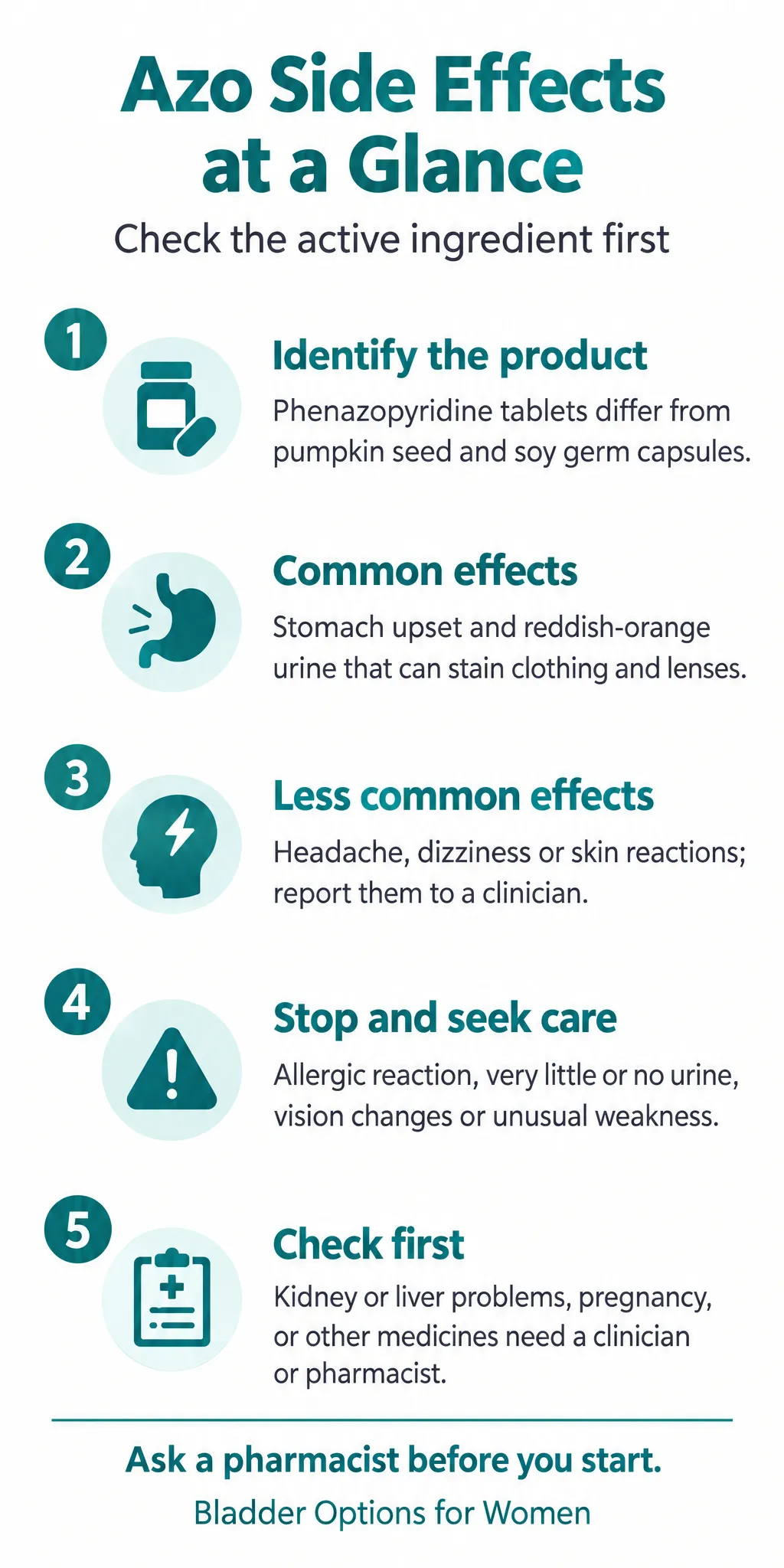
Azo-branded products report side effects including stomach upset, reddish-orange urine that can stain clothing and soft contact lenses, and, less often, headache, dizziness or skin reactions. Phenazopyridine tablets carry more serious warnings. Stop and seek medical care for an allergic reaction, very little or no urine, vision changes, or unusual weakness or fatigue. Check with a doctor or pharmacist first if you have kidney or liver problems, are pregnant, or take other medicines.
Some links on this site are affiliate links: if you buy through one, the site may earn a commission at no extra cost to you. More about this.
If you are reading this, you are probably tired of being caught off guard by sudden urges and trips to the bathroom that cut into your work, sleep and plans. Wanting something simple you can try at home before a doctor visit is a reasonable place to start, and it is what many women in your position are looking for. Our aim is to help you judge that choice clearly, without hype.
Here is what this page covers:
- Reported side effects: what people describe taking Azo-branded products, and how the phenazopyridine warnings differ.
- Common effects across bladder treatments: which symptoms show up with many options, not just this one.
- Who should check first: the conditions, pregnancy and other medicines that call for a word with a clinician.
- Warning signs: the symptoms that mean stop taking the product and get medical care.
- What to ask a pharmacist: practical questions to bring before you start.
I'll be direct about what is known and what is not, so you can decide what fits your situation.
Which Azo Product Are You Asking About?
The name "Azo" appears on more than one product, and they are not the same thing. Before you compare side effects, check which one is in your hand, because a warning written for one product does not apply to the other.
- Azo urinary pain relief tablets contain phenazopyridine, a urinary analgesic. They are labelled for short-term relief of urinary pain, burning and urgency. Phenazopyridine is the drug most people mean when they talk about a urinary pain reliever, and its side effects and warnings come from that medicine.
- Azo Bladder Control capsules contain a blend of pumpkin seed and soy germ extract. The safety profile of this blend is less documented in the sources reviewed for this page, so you should not assume it behaves like the pain tablets.
Look at the active ingredient on the box or the label first. If you see phenazopyridine, the warnings about that drug apply. If you see pumpkin seed and soy germ extract, you are looking at a supplement and should treat its side effects as an open question.
Why this matters for what you read
Many online lists mix the two products together. You may read about urine discolouration, which is a known effect of phenazopyridine, and assume it will happen with the capsules too. Or you may read a reassuring review of the capsules and assume it covers the tablets. Checking the active ingredient first keeps your comparison accurate.
If you are taking any medicine or have a health condition and are unsure which product you have, ask a pharmacist before you start. They can confirm the ingredient and tell you whether it fits with your other medication.
Phenazopyridine versus pumpkin seed and soy germ capsules
| Product | Active ingredient | Safety profile |
|---|---|---|
| Azo urinary pain relief tablets | Phenazopyridine | Warnings listed on label |
| Azo Bladder Control capsules | Pumpkin seed and soy germ extract | Less documented in sources reviewed |
Reported Side Effects of Azo Products
Azo Bladder Control contains phenazopyridine, the same active ingredient found in many prescription urinary pain medications. Knowing what people commonly report can help you decide whether it suits you, and when to call a pharmacist or doctor.
What are the most common side effects?
Stomach upset is the effect reported most often. Some people notice nausea, an upset stomach or mild discomfort. The label advises taking the product with or after meals, which may reduce this.
The other common change is harmless but startling: urine can turn reddish-orange. This is expected with phenazopyridine and does not mean something is wrong. It can stain clothing, skin, porcelain and soft contact lenses, so many people remove their lenses before taking a dose. Keep this in mind when you plan a day around the medication.
Which less common effects should I watch for?
Medical references for phenazopyridine list several less common effects, including:
- Headache
- Dizziness
- Skin rash or itching
How often these happen varies, and most people do not experience serious problems. Still, if you notice a rash, swelling, trouble breathing or yellowing of the skin or eyes, stop taking the product and get medical care straight away.
What should I check before I start?
Talk to a pharmacist or doctor first if you are pregnant, have liver or kidney problems, have a G6PD deficiency, or take other medicines. Children should not be given these products without medical advice. A short conversation can save you trouble later.
Reported effects by type of symptom
| Effect | How it is described | Action |
|---|---|---|
| Stomach upset | Nausea or mild discomfort | Take with or after meals |
| Reddish-orange urine | Expected with phenazopyridine | Harmless, but can stain |
| Headache or dizziness | Less common | Report to a clinician |
| Skin rash or itching | Less common | Stop and seek care if severe |
Warning Signs That Need Medical Care
Most people taking an over-the-counter urinary product notice nothing more than mild stomach upset or an orange tint to their urine. Some symptoms, though, mean you should stop taking the medication and get help. Knowing which ones they are is part of using any health product safely.
What does an allergic reaction look like?
Stop taking the product and seek emergency care straight away if you notice:
- Hives or an itchy, raised rash
- Difficulty breathing or wheezing
- Swelling of the face, lips, tongue or throat
Do not wait to see whether it passes. Throat swelling can get worse quickly.
What about changes in urine?
Contact your doctor promptly if you are passing very little urine, cannot pass urine at all, or notice a clear change in how much you pass. Any of these needs assessment, because they can point to a blockage or a kidney problem rather than a side effect.
Which other effects should I call about right away?
Call a doctor right away if you develop vision changes, unusual weakness or extreme tiredness. These are listed among effects to report, and you should not wait to see if they settle.
When is it an infection, not a side effect?
A fever, pain that is getting worse, or blood in your urine suggests a possible infection or another cause. Do not treat this yourself by simply taking more of the product. Get it checked. Your pharmacist can advise you on next steps, and a doctor can test a urine sample.
If you are pregnant, have kidney problems, or take other medicines, speak to a pharmacist or healthcare professional before starting or continuing any bladder product. They can help you check for interactions and tell you what is safe for you.
Who Should Check With a Clinician First
Azo Bladder Control contains phenazopyridine, a urinary pain reliever that works on the lining of the urinary tract. Because it is a drug rather than a supplement, the people who need the most caution are the ones whose bodies process or react to medicines differently. The label is a good starting point, but it does not replace a conversation with someone who knows your health history.
If you have kidney or liver disease, or reduced kidney function, ask a clinician before using any urinary pain product. Phenazopyridine is cleared through the kidneys, so existing kidney problems can change how it affects you.
If you are pregnant or breastfeeding, or you are a parent deciding on use for a child, check the label and speak with a pharmacist or doctor first. Dosing and safety information for these groups is not something to work out from a box alone.
If you take other medicines, check for interactions with a pharmacist before starting. This includes blood pressure drugs and other urinary treatments. A pharmacist can review your full list in a few minutes, and that is often the quickest route to a clear answer.
Can I use it to cover up urinary symptoms while I wait to see someone?
Please avoid this. Burning, urgency or frequent urination can be a sign of a urinary infection. Using a pain product to mask those symptoms can delay the antibiotic treatment you actually need. If you suspect an infection, get a diagnosis first. Once you know what is causing the problem, you can talk through whether a pain product fits alongside your treatment.
If you have questions about any of this, your pharmacist or doctor is the right place to start, and a short call or visit now can save you a longer problem later.
Side Effects Common Across Bladder Treatments
When you compare overactive bladder options, you will notice that many of them share the same handful of side effects. Knowing this pattern helps you judge the specific risks of any one product in context.
Prescription overactive bladder medicines commonly cause:
- Dry mouth
- Constipation
- Drowsiness
- Blurred vision
Several of these medicines can also raise the chance of a urinary infection, because they reduce how completely you empty your bladder. If you notice burning, frequent urges that feel different from before, or cloudy or strong-smelling urine, contact your doctor or healthcare provider rather than waiting it out.
Are supplements and over-the-counter products as well studied?
Usually not. Over-the-counter and supplement products generally have less established safety data than prescription drugs, so the label and a pharmacist are your main checks. Read the ingredient list, look at the recommended dose, and ask whether the product interacts with any medicine you already take, including blood pressure drugs. If you are pregnant, planning a pregnancy, or caring for children, check with a healthcare professional before taking anything new.
What about non-drug options?
Non-drug options do not carry the same drug side effects. Dr. Bri, in her review of the reusable device Uresta, describes it as a practical option she uses only during activities such as walks or runs, and she notes it is not designed as a prolapse support device. Its considerations are fit and comfort instead. She recommends a water-based lubricant rather than an oil-based one, and she advises against oil-based products on the vulva before insertion, since they make the labia too slippery to handle.
What to Do Before and While Taking It
Before you take your first dose, read the full label and directions. Check the recommended dose, how often you can take it, the maximum amount per day, and what the label says about who should not use it. Azo products contain phenazopyridine, a urinary pain reliever that works on the lining of the urinary tract. It is not a treatment for the underlying cause of an overactive bladder, so it is worth knowing what it is and is not meant to do.
If you are worried about stomach upset, ask your pharmacist whether you should take the dose with or after food. Your pharmacist can also tell you about interactions with other medicines you already take, which matters if you are on any regular drug for blood pressure or other conditions.
How do I keep track of what I notice?
Keep a short note on your phone or in a notebook. For each new symptom, write down what it was, when it started, and whether it fades over time. Include whether it happens after each dose or only sometimes. A clear record makes it much easier for a clinician to understand what is going on, and it saves you from relying on memory at an appointment.
When should I stop and get help?
Stop using the product and contact a doctor if warning signs appear. Also stop if your symptoms do not improve within the period the label or your clinician recommends. Do not keep going in the hope that it will settle on its own.
If you have had persistent frequent urination, urgency or leaks, see a doctor before you rely on any over-the-counter product. An assessment can rule out causes that no product on the shelf would treat, such as infection or other conditions that need different care. Keep Azo and any other products out of reach of children, and store them as the label directs.
What hands-on reviewers found
These are other people's hands-on tests, summarised and credited to them. Watch the full videos for their complete reviews.
Dr. Bri's Vibrant Pelvic Health: Uresta Review for Bladder Leaks and Pelvic Support 💖 Reusable, Over-the-Counter
Dr. Bri thinks Uresta is a practical, reusable, over-the-counter option that gives her mild prolapse support during activity, most comfortable at the smallest size, though it is not designed as a prolapse device and works best combined with
- The reviewer says she feels supported for her very mild prolapse when using Uresta, especially when constipated, though she does not experience bladder leaks. (at 8:23)
- She finds the smallest size, size three, works best for her, and says the sizing range lets users step up or down for more or less support. (at 10:10)
- She prefers Uresta because it is reusable, unlike Poise Impressa, which she says must be thrown away after each use and contains plastic. (at 10:44)
Frequently asked questions
What are some medications that can cause frequent urination?
Several common drugs can make you pass urine more often. Diuretics, often called water pills, are the most direct cause because they increase urine output on purpose. Some medicines for blood pressure, heart failure and diabetes can also raise urine volume or frequency, and caffeine-containing drugs add to the effect. Phenazopyridine, the active ingredient in Azo products, can also cause urgency. If you notice a new change after starting a medicine, check the label or ask your pharmacist.
Is AZO bad for the kidneys?
Phenazopyridine is cleared through the kidneys, so people with significant kidney impairment are generally advised to avoid it or use it only under medical supervision. Taking it for longer than the labeled period or at higher doses increases the risk of problems. For a healthy adult taking it briefly as directed, kidney harm is not the usual concern, but anyone with existing kidney disease should ask a clinician before using it.
How old do you have to be to buy AZO?
Age requirements for buying Azo products depend on the specific product and the retailer, and the rules can differ by country. Many store policies set a minimum age for purchase, and some Azo products are sold only as adult-strength formulas. The product label and the seller's terms are the most reliable place to check. If you are unsure whether a product is suitable for your age, speak with a pharmacist before buying.
Why does phenazopyridine turn urine orange?
Phenazopyridine is a dye with a strong color, and much of it is excreted in urine unchanged. This turns urine a bright orange, red or reddish-brown. The color is harmless and is a sign the medicine is working through your system. It can also stain soft contact lenses and fabric, so it is worth wearing old clothes and removing lenses while taking it. If the urine stays dark along with pain, fever or blood you did not expect, contact a doctor.
What are the side effects of Azo Bladder Control?
The most commonly reported side effects of phenazopyridine include headache, dizziness, nausea, upset stomach and orange-colored urine. Some people also report rash or itching. Serious reactions are uncommon but can include yellowing of the skin or eyes and blood or breathing problems, and these need urgent medical care. Check the product label and speak with a pharmacist or clinician, especially if you take other medicines or have liver, kidney or blood conditions.
Wrapping up
Side effects of Azo Bladder Control most often involve urine color, headache, dizziness and stomach upset, but any yellowing of the skin, rash or unusual bleeding means stopping and getting medical advice. Check your other medicines and health conditions before you start.
Have you noticed any of these effects after using a bladder product? Share your experience in the comments so other readers can compare.
If you want to read the product details yourself, Visit the official site and review the label before you decide.